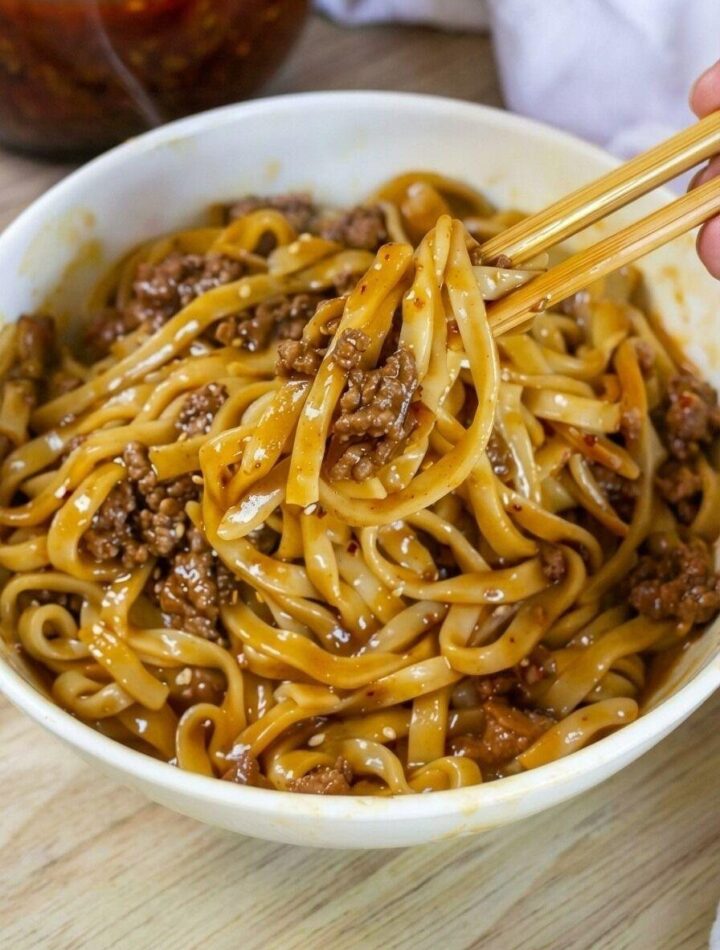
Mongolian Ground Beef Noodles have become one of the most searched quick dinner recipes worldwide, especially under trending keywords like “easy Asian noodle recipes,” “20-minute ground beef dinner,” “quick Mongolian beef noodles,” and “weeknight stir-fry noodles.”
Despite the name, this dish is not traditionally Mongolian. Instead, it is a popularized American-Chinese style stir-fry inspired by the sweet-savory profile often associated with “Mongolian beef” found in Asian restaurants. Over time, home cooks adapted it using ground beef and noodles for faster cooking, making it one of the best budget-friendly one-pan noodle meals.
Its popularity comes from three things:
- Extremely fast cooking time
- Simple pantry ingredients
- Bold restaurant-style flavor
This dish is essentially a fusion of stir-fried noodles, caramelized beef, and a glossy soy-based sauce that coats every strand perfectly.
2. Flavor Profile: Why This Dish Works So Well
The magic of Mongolian Ground Beef Noodles lies in its balanced flavor structure:
- Sweetness from brown sugar
- Saltiness from soy sauce
- Umami depth from hoisin sauce
- Heat from chili garlic sauce or Sriracha
- Aromatics from garlic and ginger
- Nutty aroma from sesame oil
This creates a perfect sweet-and-savory Asian noodle sauce that clings beautifully to noodles and beef.
The final texture is glossy, thick, and slightly sticky—exactly what makes restaurant-style Mongolian noodles so addictive.
3. Ingredient Breakdown and Culinary Function
Ground Beef (Protein Base)
Ground beef (preferably 80/20) is ideal because:
- It browns quickly
- It absorbs sauce well
- It adds rich, savory depth
Unlike sliced beef, ground beef makes this recipe faster, cheaper, and more accessible for everyday cooking.
Soy Sauce (Flavor Backbone)
Low-sodium soy sauce forms the foundation of the sauce:
- Provides saltiness
- Adds fermented umami depth
- Balances sweetness from sugar
For gluten-free versions, tamari is commonly used.
Brown Sugar (Signature Mongolian Sweetness)
Brown sugar is essential in this recipe because it:
- Creates caramel-like sweetness
- Helps form a glossy sauce
- Balances salt and spice
This sweet-savory contrast is what defines Mongolian-style noodles.
Hoisin Sauce (Complex Umami Booster)
Hoisin adds:
- Thick texture
- Slight tanginess
- Deep fermented sweetness
It enhances the restaurant-style flavor profile.
Sesame Oil (Aromatic Finish)
A small amount of sesame oil gives:
- Toasted nutty aroma
- Authentic Asian flavor profile
- Depth to the sauce
Rice Vinegar (Balancing Acid)
Rice vinegar:
- Cuts through richness
- Brightens the sauce
- Prevents heaviness
Garlic & Ginger (Aromatic Base)
Fresh garlic and ginger are key to authentic stir-fry flavor:
- Garlic adds savory warmth
- Ginger adds freshness and slight spice
Together, they create the signature “takeout-style” aroma.
Cornstarch Slurry (Sauce Thickener)
Cornstarch mixed with cold water:
- Thickens sauce instantly
- Creates glossy coating
- Helps sauce cling to noodles
This step is what transforms the dish into a restaurant-quality noodle bowl.
Noodles (Carbohydrate Base)
Any of the following work:
- Lo mein
- Udon
- Ramen
- Spaghetti
The key is a chewy texture that absorbs sauce well.
4. Cooking Technique: The Stir-Fry Method Explained
This recipe uses the classic high-heat stir-fry method, which ensures:
- Fast cooking (under 20 minutes)
- Browning of beef for flavor (Maillard reaction)
- Reduction of sauce into a glossy glaze
Cooking happens in stages:
- Sauce preparation
- Noodle boiling
- Beef browning
- Vegetable sautéing
- Sauce reduction
- Final tossing
Each step builds flavor layer by layer.
5. Texture Science: Why It Feels So Satisfying
This dish is texturally balanced:
- Soft noodles
- Juicy beef crumbles
- Slight crunch from vegetables
- Thick, sticky sauce coating
The contrast between soft and chewy textures is what makes it highly satisfying in Asian noodle cuisine.
6. Nutritional Profile Overview
Mongolian Ground Beef Noodles offer:
- High protein from beef
- Carbohydrates from noodles
- Moderate fats from oil and beef
- Adjustable sodium and sugar levels
It can easily be made healthier by:
- Adding more vegetables
- Using lean beef
- Reducing sugar or soy sauce
7. Customization Ideas (Modern Food Trends)
This recipe adapts easily to trending diets:
- High-protein version: add extra beef or eggs
- Vegetable-loaded: carrots, bell peppers, broccoli, snap peas
- Spicy version: increase Sriracha or chili garlic sauce
- Thai fusion: add fish sauce and basil
- Peanut noodles trend: add peanut butter for creamy sauce
These variations match popular search trends like “healthy Asian noodle recipes” and “easy beef stir-fry ideas.”
8. Common Cooking Mistakes to Avoid
- Overcooking noodles (they become mushy later)
- Using low heat (prevents proper browning)
- Adding slurry too early (prevents thickening)
- Skipping sauce balance tasting
9. Storage and Meal Prep Value
This dish is excellent for meal prep:
- Stores up to 4 days in the fridge
- Reheats well in skillet or microwave
- Sauce deepens in flavor overnight
Perfect for batch cooking and work lunches.
10. Final Culinary Insight
Mongolian Ground Beef Noodles represent modern fusion comfort food at its best—fast, flavorful, and flexible. It combines Asian-inspired sauces with Western convenience cooking techniques, making it one of the most reliable quick dinner noodle recipes for busy weeknights.
PART 2: Simple Step-by-Step Recipe
🍜 Mongolian Ground Beef Noodles (Quick 20-Minute Recipe)
🥣 Ingredients
For the Sauce
- ½ cup low-sodium soy sauce (or tamari for gluten-free)
- ¼ cup packed brown sugar
- 2 tbsp hoisin sauce
- 1 tbsp sesame oil
- 1 tbsp rice vinegar (or apple cider vinegar)
- 1 tsp Sriracha or chili garlic sauce
- 2 cloves garlic, minced
- 1 tsp fresh ginger, grated
- 1 tbsp cornstarch mixed with 2 tbsp cold water (slurry – add at the end)
For Beef & Noodles
- 1 lb (450 g) ground beef (80/20 preferred)
- 1 small onion, finely diced
- 8 oz (225 g) noodles (lo mein, udon, ramen, or spaghetti)
- 3 green onions, sliced
- 2 tbsp vegetable oil, divided
Optional Add-ins
- 1 cup shredded carrots
- 1 bell pepper, thinly sliced
- 1 cup snap peas or broccoli florets
For Garnish
- Sesame seeds
- Extra green onions
- Chili flakes
👨🍳 Instructions
1. Mix the sauce
Combine soy sauce, brown sugar, hoisin, sesame oil, vinegar, Sriracha, garlic, and ginger. Set aside.
2. Cook noodles
Boil until al dente, drain, and set aside. Toss lightly with oil.
3. Brown beef
Heat 1 tbsp oil, cook beef until browned. Remove and set aside.
4. Cook vegetables
Add remaining oil, sauté onion and optional vegetables until tender-crisp.
5. Add sauce + beef
Return beef to pan and pour in sauce. Simmer 1–2 minutes.
6. Thicken sauce
Add cornstarch slurry and stir until glossy and thick.
7. Add noodles
Toss noodles into sauce until fully coated.
8. Serve
Garnish with green onions, sesame seeds, and chili flakes. Serve hot.